Block Time
Block time is the time from the moment an aircraft first moves for the purpose of flight until it comes to rest after landing. The name comes from the wheel chocks, or blocks, that are removed before departure and put back after parking.
Airlines plan crews and pay on block time. Many European flight schools bill aircraft and instructors by block time. Most US schools bill the aircraft by Hobbs time.
Block time compared with other times
The same lesson gives three different numbers:
| Time | Starts | Ends | Example |
|---|---|---|---|
| Hobbs time (oil pressure switch) | Engine start | Engine shutdown | 09:57–11:22, 1.4 |
| Block time | Aircraft starts to move | Aircraft stops after landing | 10:02–11:20, 1:18 |
| Airborne time | Takeoff | Landing | 10:14–11:11, 0:57 |
Block time is in hours and minutes, and Hobbs time is in decimal hours. Convert before you price a flight: 1:18 is 1.3 hours, and 1:20 is 1.33 hours. Write down whether you round to the minute or to the nearest tenth, and put the rule on your rate sheet, so that students and instructors calculate the same total.
Block times come from the pilot's watch, so check them against the Hobbs reading of the same flight. With an oil pressure switch, a block time longer than the Hobbs time is a wrong entry.
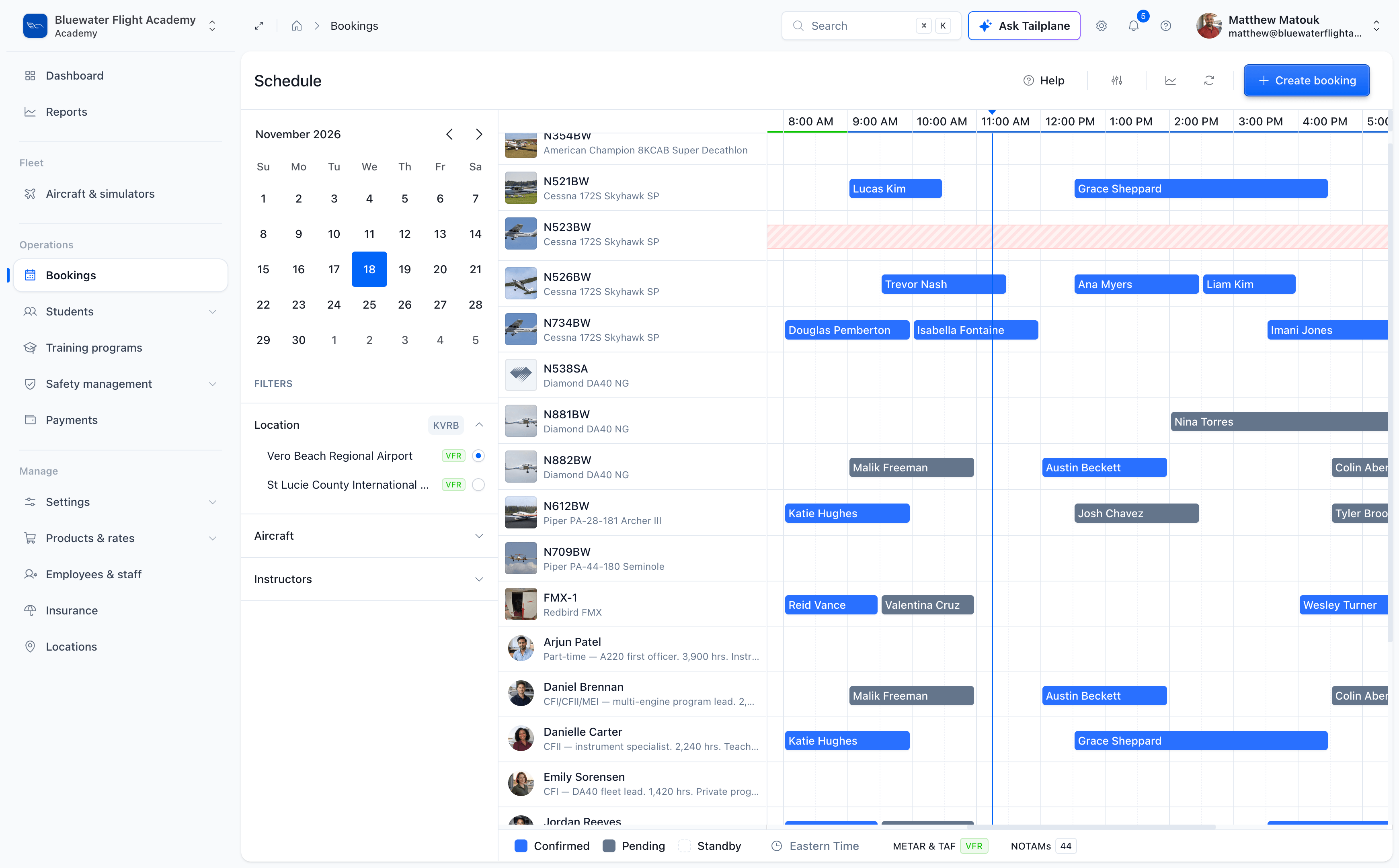
Record block time and bill by it
Block time is a time entry type in the debrief. Enter it as start and end times, or as a duration, depending on how the type is set up. Add other types, such as briefing time, in the same way.
Choose the billing basis for the school. Aircraft bill by a meter, such as Hobbs or tach, or by a time entry type, such as block time. Instructors bill by a time entry type. Give an aircraft its own billing basis when it differs from the rest of the fleet.
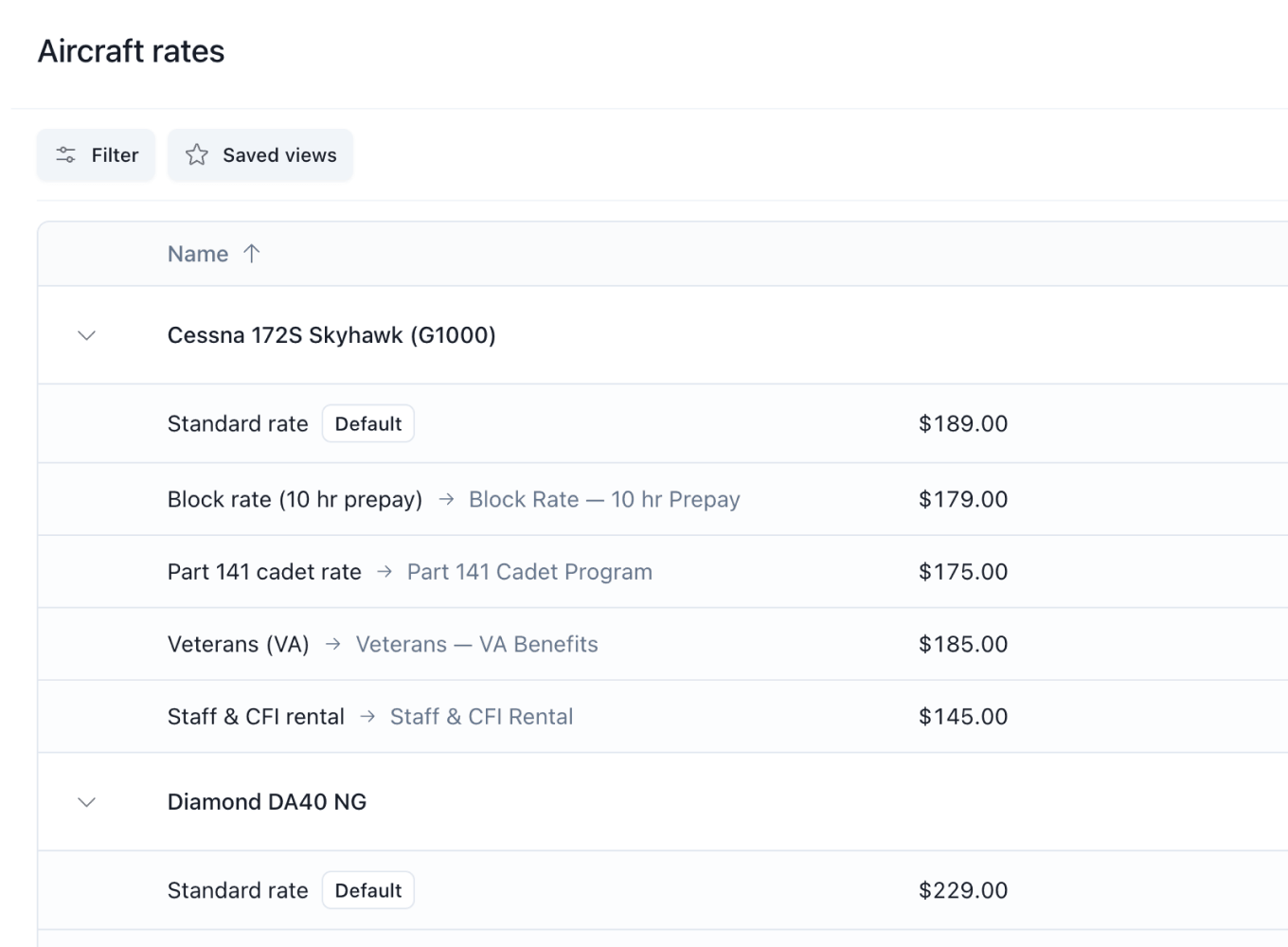
The draft invoice multiplies the hours by the price on the aircraft's and the instructor's rate card. A rate card holds a standard hourly price and a separate price for each student group, with a tax rate. When the instructor saves the flight log, the draft invoice updates, and the charge goes to the student account when you issue the invoice. See billing from the debrief.