Hazard Report
A hazard report describes a condition that could lead to an accident or incident, before anything happens. Examples are a faded hold-short line, birds near the departure end of a runway, a fuel truck that parks in a taxi lane, or a checklist that skips a step.
An incident report describes an event that already happened. Take both through the same form, and let the safety officer sort them.
What a useful hazard report contains
- Where and when. "Runway 30 departure end, weekday afternoons" helps more than "near the runway".
- What you saw. Facts only, with numbers where you have them: "a flock of about 20 gulls at 200 feet".
- What could happen. "Bird strike on climb-out."
- What you did. "Delayed takeoff by five minutes."
Keep it short, and send it the same day. A photo helps more than a long description.
From reports to the hazard register
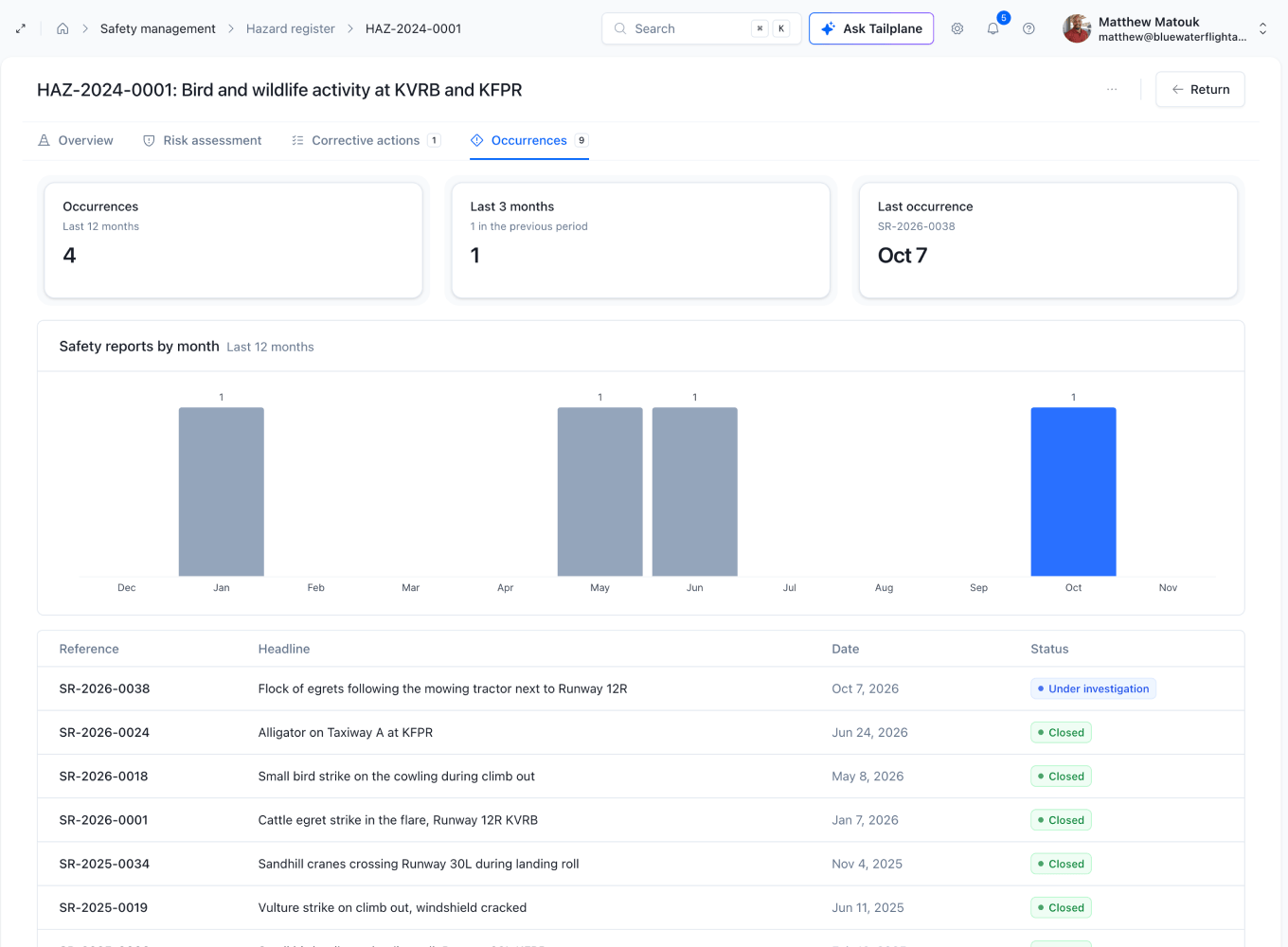
A report is one observation. The hazard register holds the condition behind it, with its controls, its owner and its risk rating. Five reports of birds in one month are five reports and one hazard: bird and wildlife activity.
Link each new report to an existing hazard where one fits. The count of linked reports then shows whether the controls work. If reports keep coming after a new control, rate the hazard again.
Tell each reporter what happened to their report, so that people keep reporting.
Keep hazards in a register
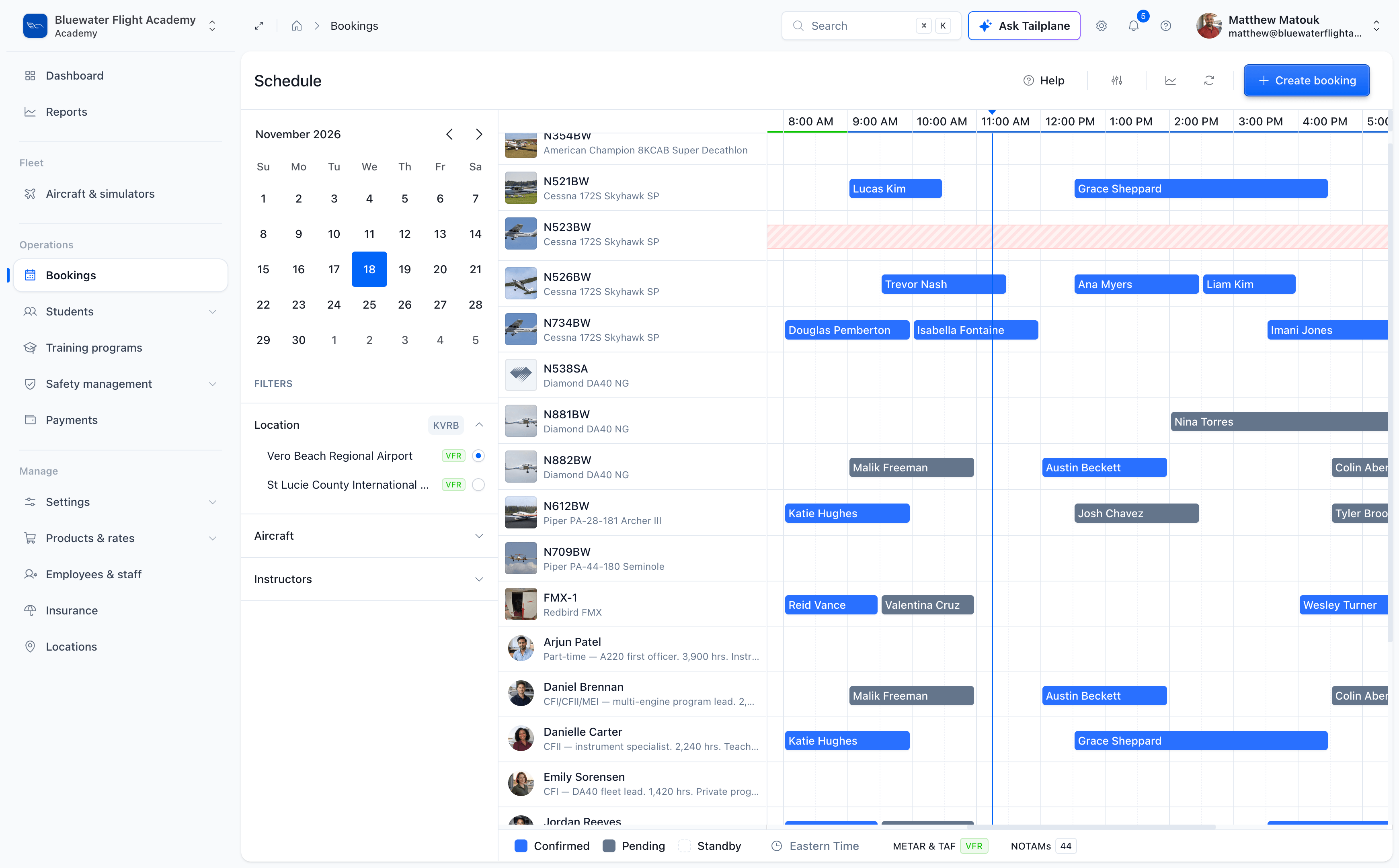
Let students, renters and staff submit a safety report from their portal, as identified, confidential or anonymous. Create a hazard from a report, from a change in the operation, or by hand. Each hazard has a number such as HAZ-2026-0001, a description, its existing controls, an owner position and an initial risk rating.
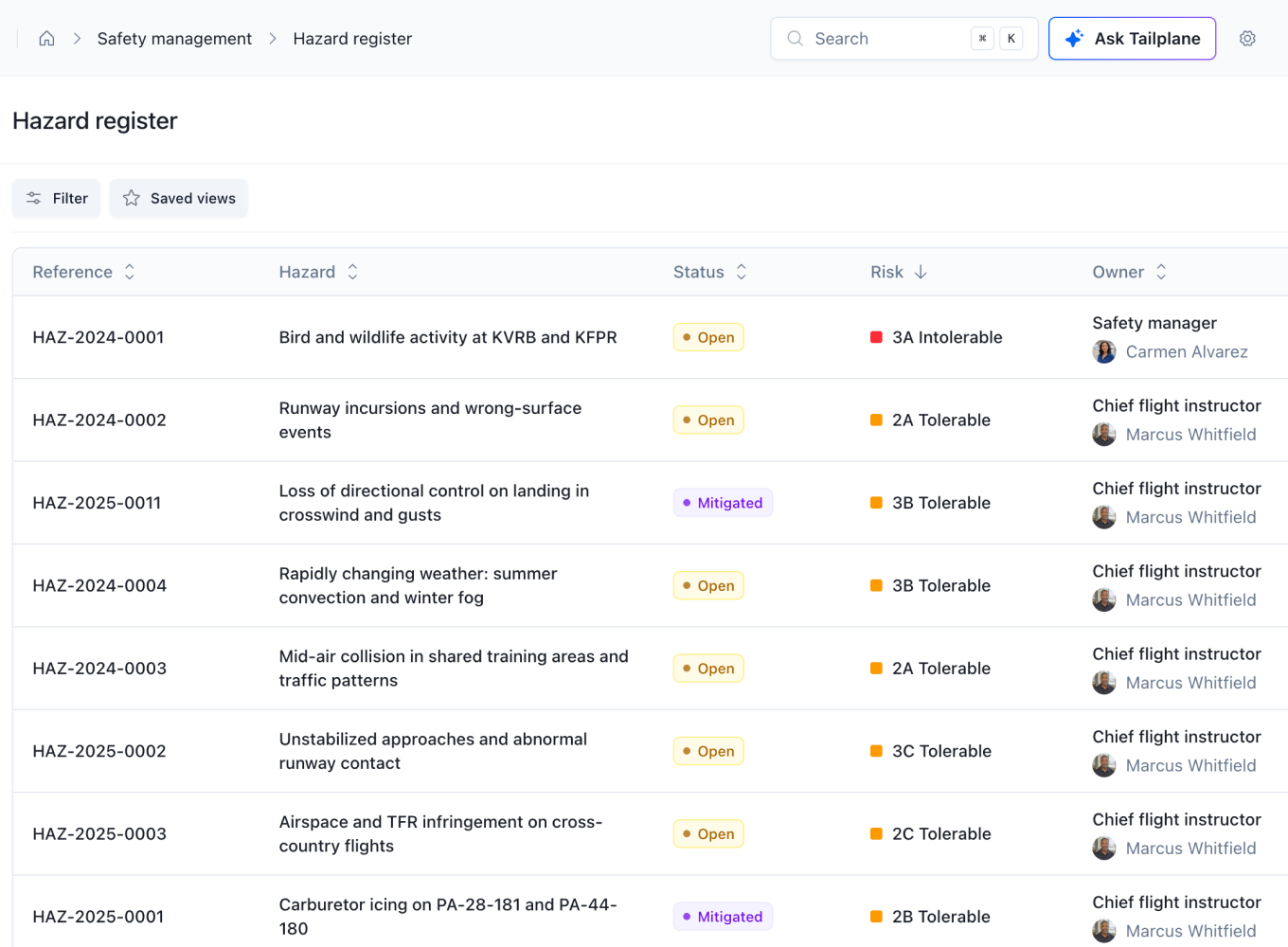
Link reports to the hazard to see how often it occurs. Add corrective actions with owners and due dates, and residual ratings as the controls take effect. Mark a hazard Mitigated when it has no open actions and its risk is acceptable, or tolerable and formally accepted.
See safety management and the student portal.